How to Choose Art for Your Living Space
Art Is Not Decoration — It's Atmosphere
The difference between a house and a home often comes down to the art on the walls. Not because art fills empty space, but because the right piece changes how a room feels. It sets a mood, starts conversations, and becomes a quiet companion to your daily life.
Choosing art for your space isn't about matching colors to your sofa. It's about finding pieces that resonate — that make you pause every time you walk by.
Consider the Room's Purpose
Every room has an emotional register, and your art should complement it:
Living Room — This is where you gather, entertain, and relax. Bold, statement pieces work beautifully here. Our collectors often choose dramatic works like Death of a Dragon or Duality of Life as living room centerpieces — pieces that command attention and invite contemplation.
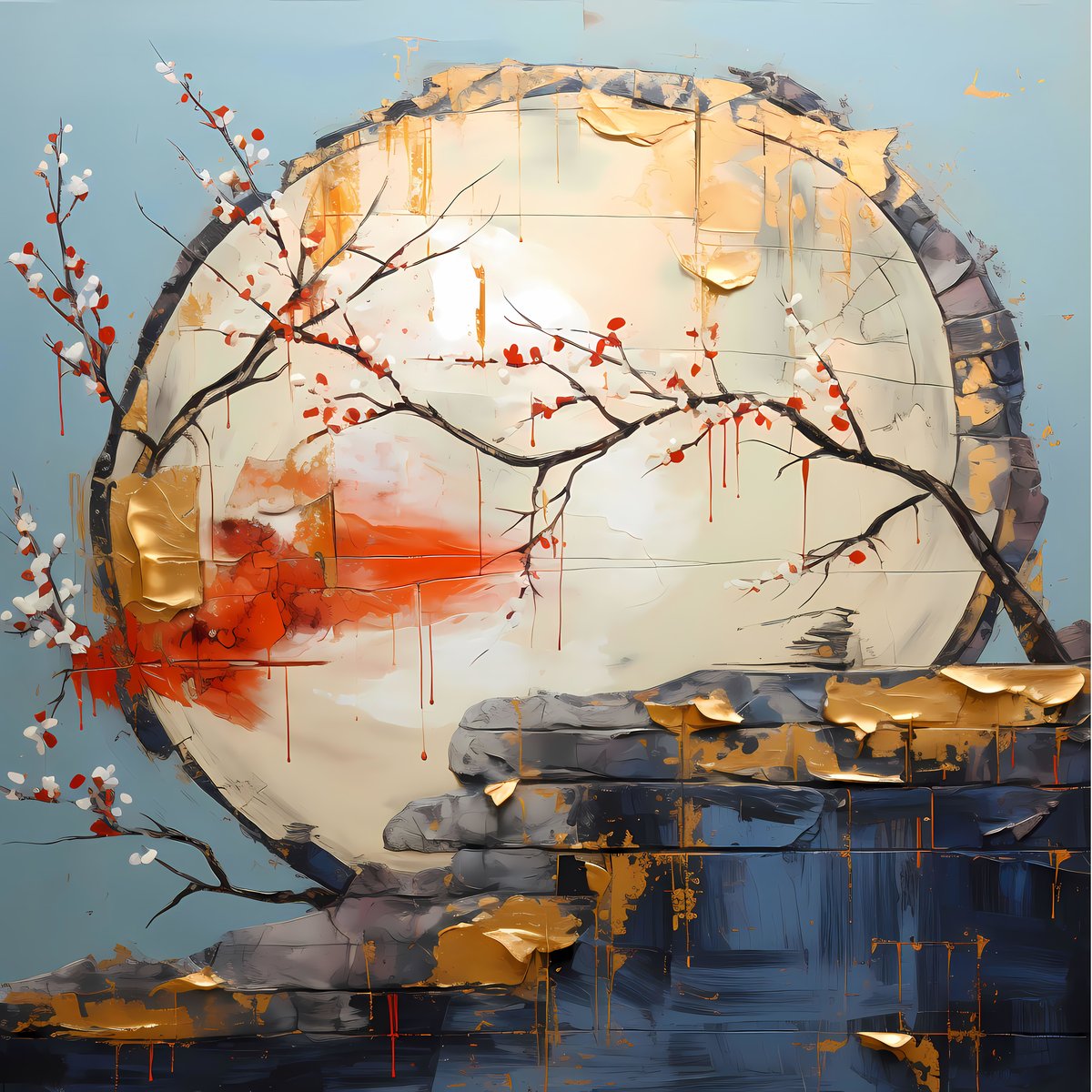
Bedroom — The bedroom is your sanctuary. Choose art that soothes rather than stimulates. Softer compositions with gentle gold tones, like Sakura Moon or Gilded Veins, create an atmosphere of calm without sacrificing visual depth.
Dining Room — Dining spaces benefit from art that creates intimacy. Gallery-style arrangements with two or three complementary pieces — like pairing Crimson Tide with Blood Petals — add warmth and sophistication to meals shared with loved ones.
Home Office — Choose art that inspires without distracting. Abstract pieces with strong composition, like Eclipse or Gilded Fractures, provide visual interest during moments of reflection without overwhelming your focus.
Scale Matters
One of the most common mistakes in art selection is going too small. A single large piece often creates more impact than a cluster of small ones.
Rules of thumb:
- The artwork should occupy roughly 60-75% of the available wall width above furniture
- For a sofa or bed, the art should be at least two-thirds the width of the furniture
- Eye level for the center of the artwork is approximately 145-150cm from the floor
- In dining rooms, hang art slightly lower — you'll be viewing it while seated
Color: Harmony, Not Matching
Your art doesn't need to match your decor — it needs to converse with it. The Kintsugi color palette of deep blacks, warm golds, and rich terracottas works beautifully in a wide range of interiors:
- Minimalist spaces — The gold accents add warmth to clean, neutral rooms
- Dark, moody interiors — The deep blacks and greys integrate seamlessly while gold provides luminous contrast
- Warm, earthy rooms — Terracotta and amber tones create a cohesive, enveloping atmosphere
- Scandinavian style — The contrast between dark artwork and light walls creates striking visual drama
The Emotional Test
Before choosing a piece, ask yourself:
- Does it stop me? — Great art interrupts your scroll, your walk, your routine
- Does it have layers? — Will I notice something new in six months?
- Does it mean something? — Art with a philosophy or story carries weight that purely decorative pieces cannot
- Can I live with it? — Not just tolerate it, but genuinely want to see it every day
Framing and Presentation
How you present your art matters almost as much as the art itself:
- Float frames add depth and a gallery-quality finish
- Frameless mounting keeps the focus entirely on the artwork
- Gallery glass reduces glare and protects against UV damage
- Proper lighting — even a simple picture light — transforms how art is perceived in the evening
Start with One Perfect Piece
You don't need to fill every wall at once. Start with one piece that truly moves you, live with it, and let the rest of your collection grow organically. The best art collections are not assembled in an afternoon — they're accumulated over a lifetime of looking, feeling, and choosing with intention.
Browse our collection to find the piece that speaks to you.
Written by
KintsugiBo
Celebrating imperfection through Kintsugi-inspired art.